Home
Wear red – the color of tongues of fire – for Pentecost!
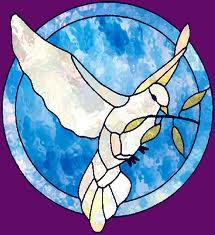
Pentecost Sunday concludes the Church’s Easter season and is frequently remembered as the “birthday of the Church.” Fifty days after the exodus of Jesus Christ from the tomb, He fulfilled the promise He made before His Ascension and He sent His Holy Spirit. The circumstances which surround the descent of the Holy Spirit echo very vividly the covenant of God with His people on Mount Sinai. On Mount Sinai, God revealed the Torah in booming voices that made Israel tremble. On Mount Zion, with “a sound like the rush of the wind” and “divided tongues as of fire” God gave us the Spirit which enables to live the Good News. Rush of wind is parallel to the thunders and lightening on Mount Sinai. The tongues of fire are similar to the torches which the people saw on Mount Sinai.
It is clear that the events in Acts are not just some unassociated miracles without rhyme or reason. The Spirit has been be poured out. A new covenant has been established. A new people of God, a new Israel, the Church will emerge.
Pentecost is not simply a feast. It is an event. THE event in the life of the Church. Unfortunately few Christians really celebrate it. Few Christians see its relevance to their everyday life. Consider this:
Without the Holy Spirit:
God is far away
Christ stays in the past
The gospel is a dead letter;
The Church is simply an organization;
Authority is a matter of domination;
Mission is a matter of propaganda;
The liturgy no more than an evocation;
Christian living a slave mentality.
(attributed to Bishop Ignatius of Latikion)
+ + + + + + + + + + + + + + + + + + + + + + +
Parish’s May Crowning Honors the Mother of God
|
[This following ancient text is based on the lament of St. Bernard of Clairvaux] |
|
|
|
We look at the Blessed Mother; this is the cry that comes from the lips of the elderly. Mary must help us bear all the loneliness and misery that comes with advanced age; she must walk with us through the dark gates of death into a better world. |
|
We look at the Blessed Mother; she is the hope of the fathers and mothers among us. With the mother who guides and educates we dare to let our children go out onto the stormy ocean of public and social life. We know they need a mother, a model, and a sure refuge. |
|
|
Blessed Mother, if you go into the battle of life with us and our children, we will dare to take up the struggle again and again. While on earth, you showed us how to master life, so we trust that we and our children will be blessed with victory over sin and the darkness of evil. |
|
|
We look at the Blessed Mother, the youth of our parish, our young men and women, admit their need. With the protection and guidance of Mary’s immaculate heart it will be possible to enter life with an undefiled heart and a pure, strong ability to love faithfully. |
|
|
We look at the Blessed Mother, the children call out in their happy children’s voices. With her care and wise education we can grow in body and soul. Our journey of faith, too, will benefit if we look time and again at the Holy Family’s faith. |
|
|
We look at the Blessed Mother, Our priests and pastors proclaim solemnly to everyone: Mary is the great missionary; she must and can work miracles of transformation in our lives. She can and will provide a home for our restless hearts. |
|
|
Mary, you are a queen! The most Blessed Trinity has confidently placed the welfare of the Church into your powerful and gentle motherly hands, just as that same Church is entrusted to each of us at our confirmation. You will lead the pilgrim people of God home to his infinite loving heart. Giving you the crown is a symbolic way to entrust to you once more the full responsibility for this task. |
|
|
Yes, Mary, this is what it means when we give you a crown! The crown symbolizes all the dignity and beauty that God himself has bestowed upon you! The crown also symbolizes your right to act as a queen and leader, as a mother and educator in and for the kingdom of God on earth. |
|
|
We wish to crown you because of our personal helplessness in facing the deep distress of our times. We struggle to find God and we search his inscrutable ways. We struggle with the distress of faith and the lack of it. Please fold your hands in prayer on our behalf! Tell your divine Son as you once did in Cana of Galilee, “Lord, they have no wine!” Ask the Lord again and again to work miracles of peace, unity and prosperity for the poor and suffering. |
|
|
Mary, we wish to crown you to acknowledge our gratitude to you for your part in the coming of Jesus Christ and, hence, in the redemption of the world. We trust that in the future you will take the destiny of our world and of our nation into your powerful yet kind and motherly hands. Serve us with the good wine of the Lord’s salvation. Hear the cries of the unborn, the elderly, the sorrowing and the suffering! |
|
|
Take our flowers for your crown. Let them represent our wish to wind you a wreath of joy and thanksgiving for the coming era. Let us work with you, our sister in faith, to make the coming millennium a Christ-centered age in which our people will do what He tells us! Be our queen! Teach us what immense dignity there is our Christian calling. Grant peace and joy to our hearts, grant peace and joy to our families, grant peace and joy to our parish. Lead our nation to follow paths of justice, and assist each of us to be worthy to wear the crown of our calling that the Lord has prepared for us at the end of our journey. |
|

Mrs. Lisa Santiti and daughter Jenna crown an image of Mary at the 11 am Mass on Sunday, May 5th. May is traditionally considered “Mary’s Month” in the Church, and is accompanied by special prayers and devotions, including the Rosary.
+ + + + + + + + + + + + + + + + + + + + + + +
Mater Dei Catholic School Marks 1st May Procession
Wednesday, May 15
Mater Dei Catholic School’s May Procession was held on May 15th. The Marian statue in front of school was crowned by an 8th grade girl, assisted by six of our 2nd and 3rd graders who received First Holy Communion earlier this month. The procession was a vibrant expression of Catholic identity and honor in thanksgiving for the School’s Patroness to God’s call: Mary, Mater Dei (Mother of God).
+ + + + + + + + + + + + + + + + + + + + + + +
St. Stanislaus Parish Celebrates 1st Communion:
Saturday, May 4th (Angelos); Sunday, May 5th (Hispanic)
Mateo Aburto Joseph Deitzel Bridget Keyser Alexandra Piotrowski
Gabriella Agnew Grace Denitz Eve Kraynak Nicole Podhajny
Emma Albright Perry DeVitis Matthew Lagreca Trae Quigley
Brianna Baldwin Sarah Jane Dilg Sarah Lagreca Caitlin Quinn
Erik Bergey Olivia Earley Kyle Lare Kara Quinn
Nathaniel Bermel Grace Eckert Allyson Leddy Susan Randolph
Brynn Biddle Lance Engel Tyler Letcher Tatiana Randolph
Luke Bitting AinsleyEngleman Eric Lewis Nicole Ranile
Emily Blanchard Allison Ferreira Alex Loja Megan Roberts
Taylor Brauning Thomas Fitzgerald Christian Loja Abbey Robinson
Deaglan Budd Patrick Francis JuliannaLoStracco Lizbeth Sanchez
Clara Burnell Margaret Friend OanhLuong Jenna Santini
Lindsay Byers Aidan Fry Jake Magarity Maggie Schaeffer
Bridget Campbell Alexander Fusca Gabriella Maroney Benjamin Schimony
KellyannCashley Mark Fusca Ilana Martin Darren Seymour
Matthew Cashley Timothy Garner Megan McCarthy Daniel Sipmeier
Olivia Chicchi Geraldine Gomez Madeleine McGovern DonteSpizzirri
Alexis Ciccarella Vanessa Gonzalez Lindsey McGuckin Alaina Steele
Erin Clark Aidan Greene Emma McHoul Matthew Sweeney
Jude Coll Andrew Growdon Michael McKeehen Cole Sykes
Liam Collier Brian Hayes Ethan Mellinger Tyler Thompson
Natalie Collier Angelique Henning Jose Mendez Nicole Tornetta
Gina Cosentino Daniel Herman Ryan Mindick Samantha Trunk
Conor Costello Diana Hernandez Jordan Molitoris Mark Ussai
Logan Crimlish Grant Hoffman Brandon Mongan Dominic Verzilli
Daniel Cross Angela Holmes Tara Moore Oliver Ward
Liam Cunningham Allison Huff Kyle Mullen Matthew Wenner
Owen Daknis Joseph Izzi Saeed Nin Christina Williamson
Jonathan Dang Erin Jesberger Emma O’Neill Marley Witkowski
Jacob Davey Artemio Jimenez Julia Pakiela Iris Young
Ava DeBoer Daniela Jimenez Mackenzie Papp Dominic Zaffino
Gretchen DeBoer Michael Jimenez Nathaniel Pepka Mia Ziegler
John DeCree Maria Perez Ryan Pico Josue Benavides
Around St. Stanislaus Parish
As always, 24/7, Adoration of the Most Blessed Sacrament in the Katharine Drexel Chapel. . . Please consider becoming an adorer! We need you.
A New Beginning Dawns on Pentecost
A reflection on the Sunday Readings by Fr. Thomas Roccia
Solemnity of Pentecost, Year C – Sunday,May 19, 2013
The readings for Pentecost are Acts 2:1-11;1 Cor 12:3b-7, 12-13 or Rom 8:8-17 and Jn 20:19- or Jn 14:15-16, 23b-26
We know the story well (Acts 2:1-10) — it is the dawn of the day of Pentecost and the followers of Jesus are gathered to wait and pray. This new day begins with an explosion of sounds from heaven, and a violent wind. The story is reminiscent of the mighty wind that hovered over the waters in the Genesis creation story. What was first heard was then seen — tongues like fire (2:3). The first gift of the Holy Spirit is the gift of speech in different languages.
The scene quickly shifts from the inside upper room, where the disciples are gathered, to the Jerusalem streets outside the house. There the Gospel is already drawing crowds together. Out in the streets, “devout Jews from every nation under heaven living in Jerusalem (2:5)” confront the church, and their initial response is bewilderment (2:6). The “tongues” spoken of are obviously various languages of “every nation under heaven,” since each foreigner exclaims: “We hear, each of us, in our own native language” (2:8).
Luke’s roll call of the nations — Parthians, Medes, Elamites, and residents of Mesopotamia, Judea and Cappadocia, Pontus and Asia, Phrygia and Pamphylia, Egypt and the parts of Libya belonging to Cyrene, and visitors from Rome, both Jews and proselytes (2:9-10) — makes it very clear that no nationality is excluded from the proclamation of the Good News. In these few lines, Luke gives us a story in miniature, of the whole plot of the Acts of the Apostles.
Authentic Christian spirituality
Chapter 8 of Paul’s letter to the Romans addresses the elements of authentic spirituality (vv 8-17). To please God is the goal of human life aimed at by both Jew and Christian, yet this goal cannot be attained by those who are dominated by self (“in the flesh”). In order to please God, one must be “in the Spirit,” i.e., living “according to the Spirit” (8:5).
According to Paul, the baptized Christian is not only “in the Spirit,” but the Spirit is now said to dwell in him or her. Paul insists that attachment to Christ is only possible by the “spiritualization” of human beings. This attachment is no mere external identification with the cause of Christ, or even a grateful recognition of what he once did for humanity. Rather, the Christian who belongs to Christ is the one empowered to “live for God” through the vitalizing influence of his Spirit.
Without the Spirit, the source of Christian vitality, the human “body” is like a corpse because of the influence of sin, but in union with Christ the human “spirit” lives, for the Holy Spirit raises the dead to life. The Spirit not only gives new life, but also establishes for human beings the relationship of an adopted son and daughter and heir. It is the Spirit that animates and activates the Christian and makes one a child of God. The theme of sonship in Romans is Paul’s attempt to describe the new status of the Christian in relation to God. Christians have received the Spirit (of Christ or God), but this is not a “spirit” in the sense of a disposition or mentality that a slave would have. Animated by God’s Spirit, the Christian cannot have the attitude of a slave, for the Spirit sets free. Through the Spirit the Christian proclaims that God is Father.
Pentecost in the Gospel of John
Today’s Gospel scene takes place on the night of the first Easter. Jesus’ appearances to the disciples, without or with Thomas (John 11:16; 14:5), have parallels in the other gospels only for John 20:19-23; cf Luke 24:36-39; Mark 16:14-18. John’s first appearance of the Risen Lord to the disciples is both intense and focused (20:19-23). It is evening and the doors were bolted shut. Anxious disciples are sealed inside. A suspicious, hostile world is forced tightly outside. Jesus is missing. Suddenly, the Risen One defies locked doors, blocked hearts, and distorted vision and simply appears.
The meeting with the risen Lord in John’s account is the humble yet powerful beginning of a new age: Fear is transformed into joy; pain is changed to peace and trust; flight and hiding become courage and mission. Division and hatred are vanquished by the gift of the Holy Spirit — by God’s love revealed in Jesus and through his power to remove evil and sinfulness.
Jesus “breathing on them” recalls Genesis 2:7, where God breathed on the first man and gave him life; just as Adam’s life came from God, so now the disciples’ new spiritual life comes from Jesus. This action is also reminiscent of the revivification of the dry bones in Ezekiel 37. This is the evangelist John’s version of Pentecost.
“Peace be with you” is the greeting and gift of the Risen Lord. The Hebrew word “shalom” means re-establishing the full meaning of things. Biblical peace is not only a pact that allows a peaceful life, or indicates the opposite of a time of war. Rather, peace refers to the well being of daily existence, to one’s state of living in harmony with nature, with oneself and with God. Concretely, this peace means blessing, rest, honor, richness, health and life. The gift of peace, that Jesus entrusted to his first disciples, becomes a promise and a prayer shared with the Christian community.
The mission and the power of Jesus are entrusted into the poor, limited and fragile hands of his apostles. Through the work of the Holy Spirit, that same mission continues in them, granting the power to forgive sins and the possibility of reconciliation and intimacy with the Father.
Courageous heralds of the Gospel
The Holy Spirit renewed the Apostles from within, filling them with a power that would give them courage to go out and boldly proclaim that “Christ has died and is risen!” Frightened fishermen had become courageous heralds of the Gospel. Even their enemies could not understand how “uneducated and ordinary men” (Acts 4:13) could show such courage and endure difficulties, suffering and persecution with joy. Nothing could stop them. To those who tried to silence them they replied: “We cannot keep from speaking about what we have seen and heard” (Acts 4:20). This is how the Church was born, and from the day of Pentecost she has not ceased to spread the Good News “to the ends of the earth” (Acts 1:8).
At Pentecost, the full meaning of Jesus’ life and message is poured into our hearts by the Spirit alive in the community. The movement of the Spirit in people results in gifts and talents. This movement does not reach its end in individuals. Rather, it is supposed to have a ripple effect so that our unique abilities promote the common good. The Spirit’s gifts are many: teaching, instructing, healing, consoling, forgiving, and encouraging. The Spirit will increase our gifts to the extent that we love Jesus and our brothers and sisters, obey the commandments, and share what we have received so lavishly and freely with others.
Christian hope: a gift of the Spirit
Hope is one of the true manifestations of the Spirit at Pentecost. For the world of sound bites, hope usually means that we make ourselves believe that everything is going to turn out all right. We use the word hope lightly and cheaply. This is not the hope of Christians. We must be icons of hope, a people with a new vision, a people that learn to see the world through the lenses of Christ, the Spirit, and the Church.
The Second Vatican Council encouraged Christians to read the signs of the times, and for Pope John XXIII these were signs of hope and glimpses of the Kingdom’s presence in our midst. The Kingdom manifests itself through the gifts of the Holy Spirit: wisdom, understanding, counsel, courage, knowledge, piety, and fear of the Lord. And the Spirit’s fruits make the Kingdom palpable and palatable: love, joy, peace, patience, kindness, goodness, long suffering, mildness, faith, modesty, continency, and chastity.
It is also possible to follow a “via negativa” and to say where the Kingdom is not. Where there is no justice, no peace, no sharing, no mutual trust, no forgiveness, there is no Kingdom. Where there is rancor, envy, distrust, hatred, ignorance, indifference, unchastity, cynicism, there is no Kingdom and certainly no life.
In God himself, all is joy
A second manifestation of the Spirit at Pentecost is joy. Pope Paul VI’s 1975 Apostolic Letter on Christian Joy — “Gaudete in Domino” — describes this joy: “Let the agitated members of various groups therefore reject the excesses of systematic and destructive criticism! Without departing from a realistic viewpoint, let Christian communities become centers of optimism where all the members resolutely endeavor to perceive the positive aspect of people and events. ‘Love does not rejoice in what is wrong but rejoices with the truth. There is no limit to love’s forbearance, to its trust, its hope, its power to endure.’
“The attainment of such an outlook is not just a matter of psychology. It is also a fruit of the Holy Spirit. This Spirit, who dwells fully in the person of Jesus, made Him during His earthly life so alert to the joys of daily life, so tactful and persuasive for putting sinners back on the road to a new youth of heart and mind! It is this same Spirit who animated the Blessed Virgin and each of the saints. It is this same Spirit who still today gives to so many Christians the joy of living day by day their particular vocation, in the peace and hope which surpass setbacks and sufferings. It is the Spirit of Pentecost who today leads very many followers of Christ along the paths of prayer, in the cheerfulness of filial praise, towards the humble and joyous service of the disinherited and of those on the margins of society. For joy cannot be dissociated from sharing. In God Himself, all is joy because all is giving.”


![CELPentecost[1]](http://www.ststanislaus.com/wp-content/uploads/2010/09/CELPentecost1-1024x492.jpg)